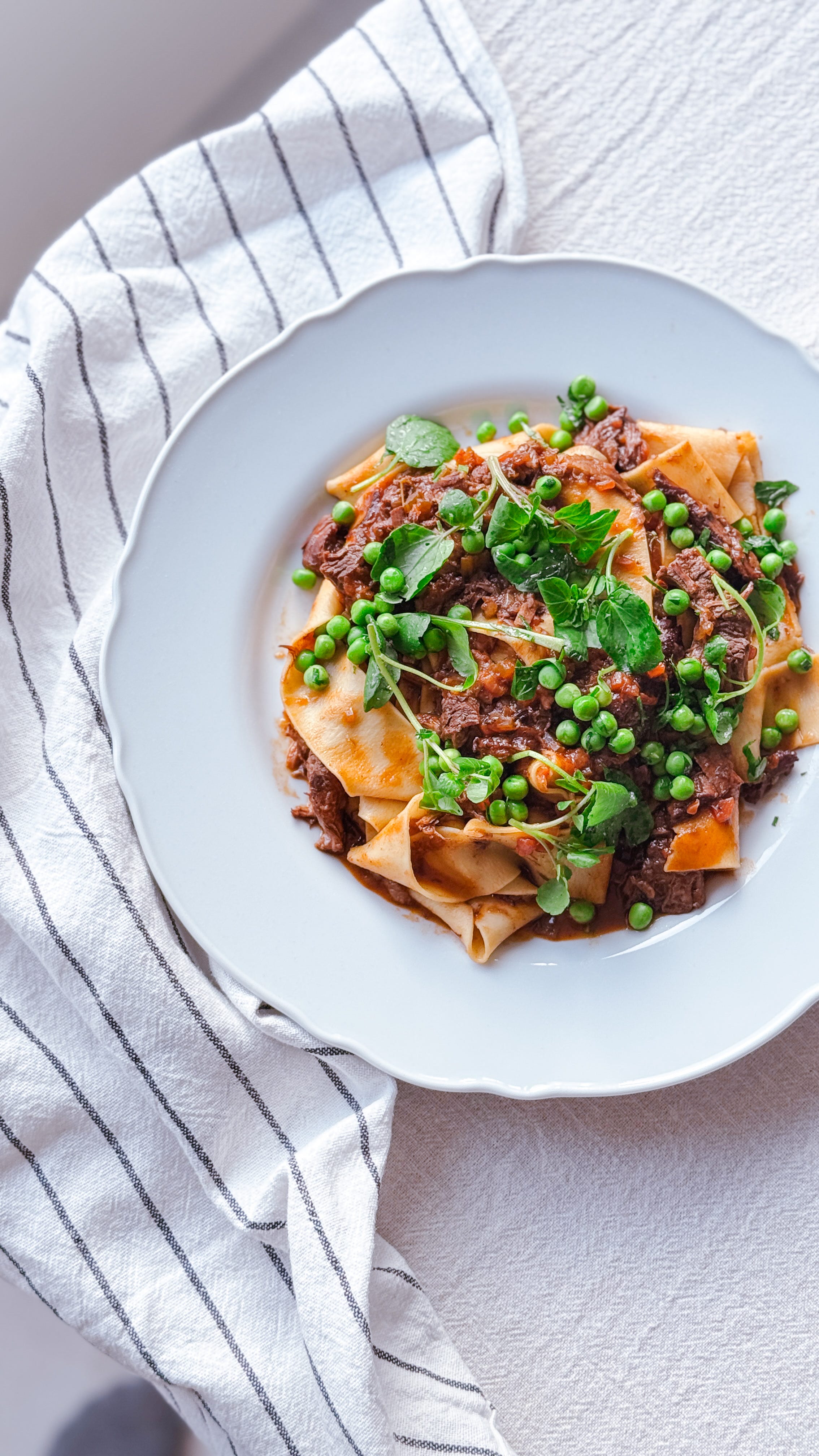
When you have a little extra time, or simply want to cook ahead, ragù is always a good idea.
There is something incredibly satisfying about letting a pot gently simmer for hours while your kitchen slowly fills with the aroma of red wine, herbs and slow-cooked beef. The longer you wait, the better it gets. And of course, you keep checking the pot—not because it needs you, but because you can’t resist tasting another spoonful as the flavours become deeper, richer and more complex.
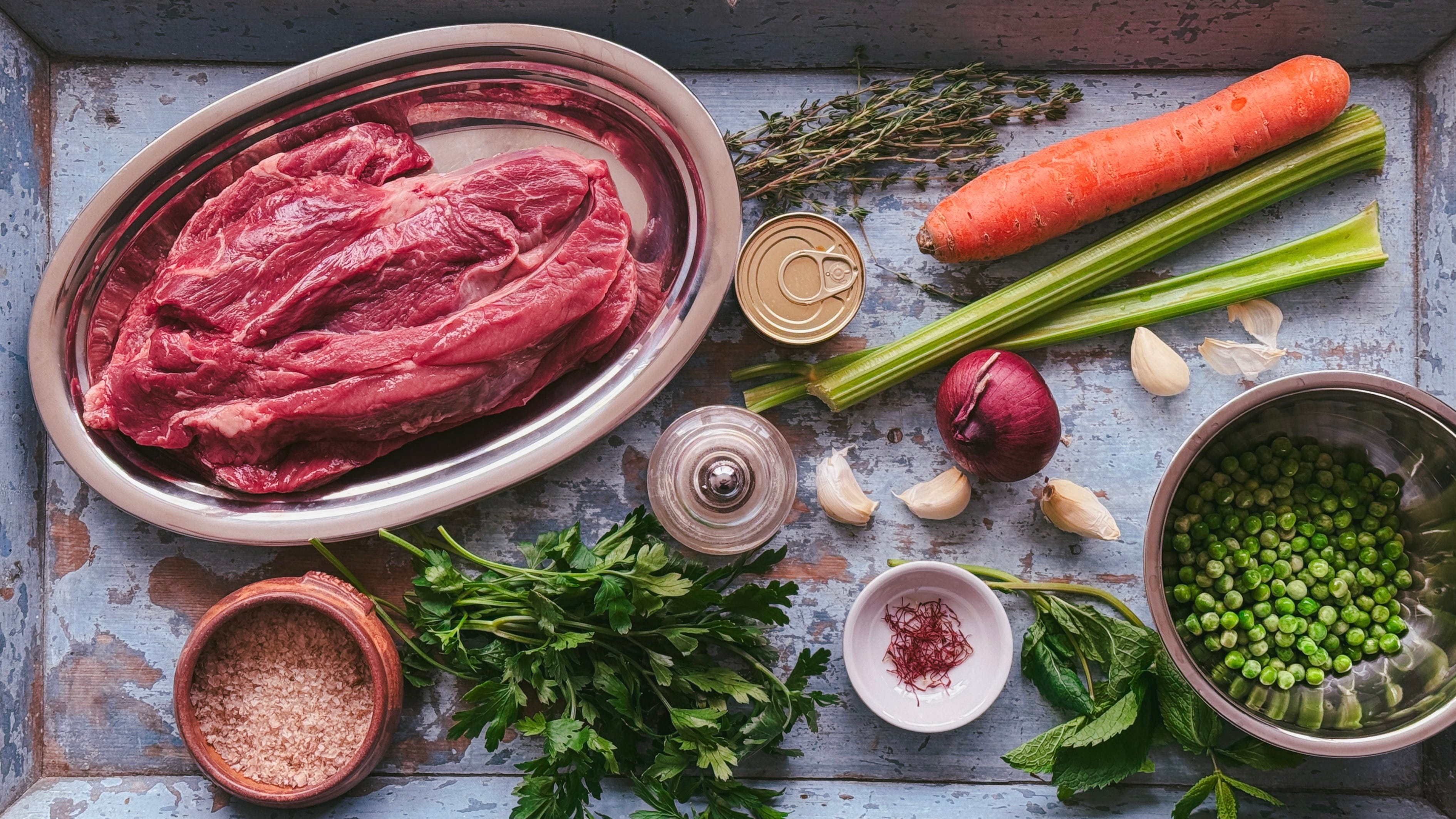
🥩 Beef Ragù
Ingredients
-
1 kg beef chuck roast (whole piece)
-
Olive oil
-
2 red onions, diced
-
1 carrot, diced
-
2 celery stalks, diced
-
3 garlic cloves, finely chopped
-
2 tbsp tomato purée
-
250 ml dry red wine
-
500 ml beef stock
-
2 bay leaves
-
A few sprigs of fresh thyme
-
Salt
-
Freshly ground black pepper
Method
-
Pat the beef dry with paper towels and season generously with salt and freshly ground black pepper.
-
Heat a generous splash of olive oil in a heavy pot over high heat.
-
Sear the beef on all sides until deeply caramelised. Don’t force it—turn the meat only once it naturally releases from the pan.
-
Remove the beef and set aside.
-
Add the onions, carrot and celery, and cook for 8–10 minutes until softened.
-
Stir in the garlic and cook for another minute.
-
Add the tomato purée and cook for 2–3 minutes until slightly caramelised.
-
Deglaze with the red wine and reduce by about half, until almost syrupy.
-
Add the beef stock, bay leaves and fresh thyme.
-
Return the beef to the pot together with all the juices released while resting.
-
The liquid should come about three-quarters of the way up the meat.
Create a cartouche by cutting a circle of baking paper with a small hole in the centre. Place it directly on top of the meat and liquid.
Cook gently for at least 4 hours, or until the beef falls apart effortlessly.
Check the ragù every hour or so and top up with a splash of water or stock if needed.
Remove the beef, shred it with two forks and return it to the sauce. Let it simmer for another 15–20 minutes so the meat absorbs all the flavour.
🍝 Fresh Pappardelle
Ingredients
-
200 g flour
-
2 eggs
Method
-
Combine the flour and eggs in a food processor until a rough dough forms.
-
Finish kneading by hand for 8–10 minutes until smooth and elastic.
-
Wrap and rest for at least 30 minutes.
-
Roll the dough using a pasta machine.
-
Dust generously with flour and cut into wide pappardelle ribbons.
🌿 Spring Herb Salad
Ingredients
-
Blanched peas
-
Watercress
-
Flat-leaf parsley
-
Extra virgin olive oil
-
Lemon juice
-
Lemon zest
-
Flaky sea salt
Method
Gently toss the peas, watercress and parsley with a drizzle of olive oil, a squeeze of lemon juice, a little lemon zest and a pinch of flaky sea salt just before serving.
🍽️ Assemble
Method
-
Cook the fresh pappardelle in generously salted boiling water until al dente.
-
Warm the ragù in a large pan.
-
Transfer the cooked pasta directly into the ragù.
-
Add a splash of pasta water if needed and gently toss until every ribbon is beautifully coated in the sauce.
-
Divide between bowls and finish with the spring herb salad and plenty of freshly grated Parmigiano Reggiano.
🔄 Variations
-
Swap pappardelle for tagliatelle or rigatoni.
-
Add a Parmesan rind while the ragù cooks for even more depth.
-
Replace peas with broad beans when they’re in season.
-
Swap beef chuck roast for beef shin for an even richer ragù.
✨ 3xT — Tips, Tricks & Twists
Tip: Don’t rush the browning. 🥩 Proper caramelisation builds the foundation of the entire ragù.
Trick: Use a cartouche. 📜 It slows evaporation while concentrating the flavours, giving you a richer, silkier sauce.
Twist: Finish with a fresh herb salad instead of mixing herbs into the ragù. 🌿 The peas, watercress, parsley and lemon brighten every bite and balance the richness beautifully.
Bonus: Save a cup of pasta water. 🍝 The starch helps bind the sauce to the pasta, creating a silky, restaurant-quality finish.
Dober tek! 👨🍳